Broadcast networks frequently revise their transmission configurations to improve coverage, enhance quality, or comply with updated standards. These adjustments, while beneficial, can leave viewers searching for accurate details to restore or maintain channel availability.
Rather than treating frequency data as static, an effective reference recognizes it as a constantly shifting system. Updated transmission parameters, satellite alignments, and signal specifications must be tracked carefully to ensure continued access to content.
Users often turn to online resources with specific goals, such as restoring missing channels or optimizing signal strength. Clear, searchable information helps eliminate uncertainty and reduces the time spent experimenting with receiver settings.
Well-crafted frequency content translates complex broadcast terminology into practical guidance. By explaining how individual parameters interact, users gain greater control over their satellite configurations without requiring professional assistance.
Regional signal variations add another layer of complexity to satellite reception. Differences in coverage zones, beam focus, and satellite positioning mean that reliable frequency data must account for location-based reception conditions.
From an SEO perspective, technical accuracy paired with logical content structure increases visibility and user engagement. When information aligns with real search behavior, it becomes easier for audiences to find relevant answers quickly.
As broadcasting infrastructure continues to advance, maintaining a trusted source of updated transmission data becomes increasingly important. Timely revisions ensure that information remains useful long after initial publication.
A comprehensive frequency-focused introduction sets the foundation for informed viewing, allowing users to navigate satellite technology with clarity while staying connected to the channels they rely on every day.
Satellite frequencies change frequently due to system upgrades, satellite migrations, and broadcasting policy adjustments. Without access to verified and current information, users risk losing channels or experiencing unstable signals that affect viewing quality and reliability.
A reliable frequency-focused resource brings together channel parameters, satellite positions, and transmission details in a structured format that search engines and users can easily understand. Clear headings, descriptive terminology, and relevant keywords ensure that information is both discoverable and practical.
Modern audiences rely on search engines to locate precise satellite frequency details quickly. Well-organized content that answers common search queries helps users configure receivers efficiently while improving visibility across digital platforms.
Broadcasting standards such as DVB-S and DVB-S2, symbol rates, polarization types, and coverage areas are essential elements that require accurate explanation. Presenting these technical factors in a simplified yet detailed manner enhances usability and supports higher search relevance.
Regional satellite coverage and beam differences significantly impact reception quality. Including geographic considerations allows users to find location-specific frequency information, improving both user satisfaction and search performance.
Search engine optimization in satellite content depends on clarity, freshness, and technical accuracy. Regularly updated frequency data strengthens credibility and increases long-term ranking potential within competitive search results.
Providing contextual explanations alongside frequency listings reduces bounce rates and encourages deeper engagement. When users find answers quickly, search engines recognize the content as valuable and authoritative.
As satellite broadcasting continues to expand globally, the demand for precise, searchable frequency information grows. Structured satellite data helps users stay connected while supporting sustainable organic traffic growth.
A professionally optimized frequency platform serves as a trusted reference for satellite viewers and installers, combining technical precision with SEO-driven content structure to deliver lasting value for both users and search engines
Nilesat is one of the most important communication satellites in the Middle East and North Africa (MENA) region. Since its launch in 1998, it has become the backbone of satellite broadcasting in the region, offering a wide range of services including television, radio, and internet. Known for its extensive coverage and reliability, Nilesat plays a crucial role in connecting millions of viewers, businesses, and institutions across the Arab world.
🚀 On the subject of Nilesat
Nilesat, operated by the Egyptian company Nilesat Satellite Communications, provides satellite broadcasting services to a wide range of customers across the Middle East, North Africa, and parts of Europe. The satellite allows for the transmission of television and radio signals, as well as data and internet services.
Nilesat’s fleet of satellites serves multiple purposes:
-
Broadcasting TV channels: Free-to-air and subscription-based channels.
-
Radio broadcasting: National and regional radio stations.
-
Data services: Internet access and other telecommunication services.
-
Corporate communications: For businesses and institutions requiring dedicated communication lines.
With several satellites in orbit, including Nilesat 101, Nilesat 102, and the more recent Nilesat 201, the network continues to grow in capacity and service offerings.
🌐 Nilesat’s Satellite Fleet
Nilesat operates a fleet of geostationary satellites positioned to serve the MENA region and beyond. These satellites are carefully positioned to provide the best possible signal coverage. Key satellites in the fleet include:
-
Nilesat 101
-
Nilesat 102
-
Nilesat 201
-
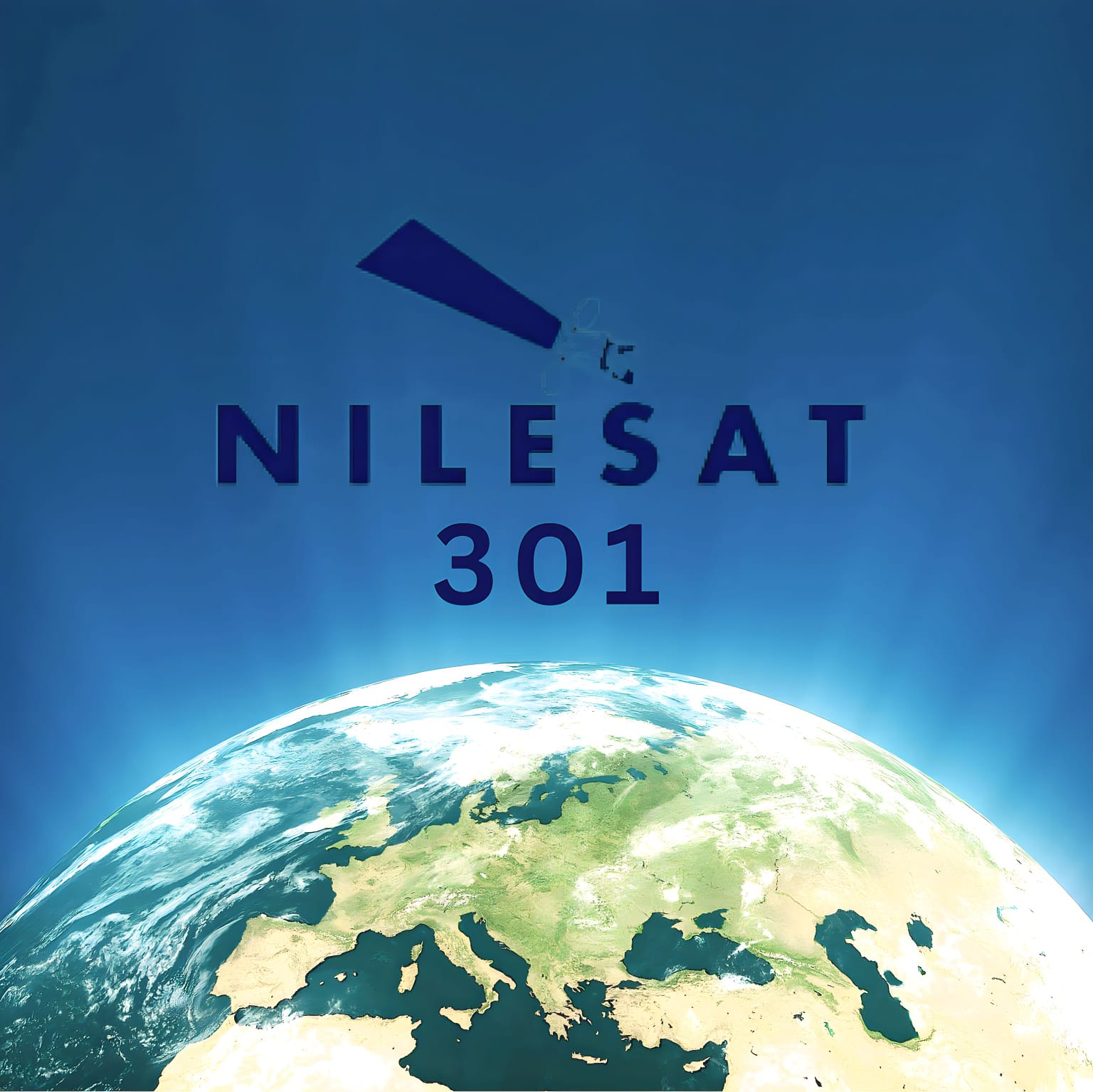
Nilesat 301 (upcoming)
These satellites are strategically placed to ensure seamless coverage for broadcasting TV channels, radio stations, and other telecommunication services.
🛰️ Frequencies and Services on Nilesat
Nilesat operates across various frequency bands, including the C-band and Ku-band. These frequencies are used for various services:
-
C-band: Primarily used for long-range communication and broadcasting, C-band offers a stable signal with less interference from weather conditions. It’s commonly used for television broadcasting.
-
Ku-band: This band is widely used for satellite TV broadcasting and internet services. The Ku-band offers higher capacity and smaller antennas, making it ideal for both residential and commercial use.
Nilesat also provides a variety of frequency ranges that enable users to access a broad array of channels and services. Users looking to set up satellite systems can find detailed guides to help them tune in to the correct frequencies.
📡 How to Receive Nilesat Signals
To access Nilesat’s satellite signals, users need a satellite dish and a receiver that supports the appropriate frequency bands (C-band or Ku-band).
The dish must be correctly aligned with the satellite’s orbital position for optimal signal reception. Once the dish is set up, users can enter the corresponding frequency in their receiver to access the desired channels.
Common Nilesat Frequencies:
-
Nilesat 101/102 Frequency:
-
Frequency: 11.977 GHz (Vertical)
-
Symbol Rate: 27500
-
FEC: 3/4
-
-
Nilesat 201 Frequency:
-
Frequency: 12.515 GHz (Horizontal)
-
Symbol Rate: 27500
-
FEC: 3/4
-
Users can access various TV channels, radio stations, and data services on these frequencies.
For easy access to these frequencies and satellite configurations, FreqSatellite is a reliable platform offering up-to-date information on Nilesat’s channels, frequencies, and settings.
Nilesat remains a vital asset for satellite communications and broadcasting in the Arab world.
With its broad coverage, extensive services, and reliable signal quality, it is a key player in delivering television, radio, and internet services to millions of people in the MENA region.
Whether you’re looking to set up a satellite system for personal or commercial use, Nilesat continues to provide top-notch services. For more information on frequencies and satellite settings, FreqSatellite offers the most comprehensive and current satellite guides.
The thoroughly researched and freshly updated parameters presented throughout this article represent our unwavering commitment to delivering actionable intelligence that transcends regional boundaries and device limitations.
We genuinely anticipate that implementing these details has revitalized your channel lineup, bringing back vibrant picture quality and robust audio across all your preferred genres and broadcasters.
Our ongoing surveillance of transponder activities across major satellites ensures that future updates will continue to preempt potential disruptions before they affect your viewing routine.
We deeply value the vibrant community of satellite enthusiasts who contribute their knowledge and experiences, enriching the collective understanding of this fascinating technology.
Your success stories inspire us, while any reported difficulties guide our improvements in clarity and comprehensiveness.
In case you have any problem, you can contact us by leaving a comment below the article, and our support team will respond to you with the correct information as soon as possible, dedicated to achieving perfect reception for every user.
Our team is dedicated to delivering accurate, timely information so you can enjoy crystal-clear reception across all major satellites.
In case you have any problem, you can contact us by leaving a comment below the article, and our support team will respond to you with the correct information as soon as possible.
We sincerely hope the provided information has restored full access to your favorite entertainment, sports, news, and religious channels.
Keeping pace with constant satellite adjustments is challenging, but our dedicated monitoring ensures you always have the latest details.
Manual tuning using verified parameters remains the most reliable method for perfect results.
We value the community that makes this resource possible.
Share your success stories or challenges—we’re here to help.
In case you have any problem, you can contact us by leaving a comment below the article, and our support team will respond to you with the correct information as soon as possible.