Transmission values are subject to frequent modification as broadcasters refine coverage areas and upgrade technical systems. These changes require users to rely on updated references rather than outdated receiver scans.
Many reception issues originate from minor configuration mismatches rather than equipment malfunction. Correct alignment of technical parameters often restores full channel availability quickly.
Frequency resources designed for clarity help users interpret complex signal data without confusion. Well-explained information removes uncertainty and improves tuning accuracy.
Satellite coverage varies from one region to another, making generalized data insufficient. Region-aware information improves reception success and reduces signal interruptions.
Search engines prioritize content that delivers accurate answers in a structured format. Organized satellite information increases visibility while serving real user needs.
A well-crafted frequency introduction prepares users to navigate satellite technology with confidence and maintain uninterrupted access to their preferred channels.
Broadcasters and satellite operators frequently implement updates to frequencies, symbol rates, polarization settings, and forward error correction values to optimize bandwidth usage, enhance signal resilience against interference, introduce new channel packages, or comply with international orbital regulations. These modifications, while essential for improving service quality and expanding coverage footprints, often result in viewers temporarily losing access to certain channels until their receivers are updated with the latest tuning information.
This article serves as a comprehensive and up-to-date resource, presenting verified frequency details for major satellites including Nilesat, Arabsat, Eutelsat, Hotbird, Astra, and others, empowering you to manually configure your receiver for immediate restoration of crystal-clear reception and long-term viewing stability.
Broadcast networks frequently revise their transmission configurations to improve coverage, enhance quality, or comply with updated standards. These adjustments, while beneficial, can leave viewers searching for accurate details to restore or maintain channel availability.
Rather than treating frequency data as static, an effective reference recognizes it as a constantly shifting system. Updated transmission parameters, satellite alignments, and signal specifications must be tracked carefully to ensure continued access to content.
Users often turn to online resources with specific goals, such as restoring missing channels or optimizing signal strength. Clear, searchable information helps eliminate uncertainty and reduces the time spent experimenting with receiver settings.
Well-crafted frequency content translates complex broadcast terminology into practical guidance. By explaining how individual parameters interact, users gain greater control over their satellite configurations without requiring professional assistance.
Regional signal variations add another layer of complexity to satellite reception. Differences in coverage zones, beam focus, and satellite positioning mean that reliable frequency data must account for location-based reception conditions.
From an SEO perspective, technical accuracy paired with logical content structure increases visibility and user engagement. When information aligns with real search behavior, it becomes easier for audiences to find relevant answers quickly.
As broadcasting infrastructure continues to advance, maintaining a trusted source of updated transmission data becomes increasingly important. Timely revisions ensure that information remains useful long after initial publication.
A comprehensive frequency-focused introduction sets the foundation for informed viewing, allowing users to navigate satellite technology with clarity while staying connected to the channels they rely on every day.
Satellite channel reception depends on a range of precise factors that are constantly changing, including frequency updates, satellite transitions, and differences in broadcasting systems. Ignoring these changes can lead to lost channels or weakened signals, which is why Freq Zone was created to serve as a reliable reference that tracks updates and delivers them accurately and on time.
Rather than presenting numbers and parameters alone, the platform focuses on offering a deeper understanding of how satellite broadcasting systems operate. Through detailed explanations and practical guidance, Freq Zone helps users configure their receivers efficiently and achieve optimal signal quality without requiring advanced technical expertise.
With the growing number of channels and the wide variety of satellites worldwide, finding accurate information can be a real challenge. For this reason, Freq Zone emphasizes smart content organization, allowing visitors to access channel frequencies by satellite, content category, or geographic region, saving both time and effort.
The website continuously keeps pace with developments in digital broadcasting, whether related to technical upgrades or transmission changes. This commitment to regular updates makes Freq Zone a dependable source for staying informed and ensuring that no channel is lost due to sudden frequency adjustments.
Ultimately, Freq Zone represents more than just an informational website; it is a comprehensive knowledge hub that balances technical precision with ease of presentation, delivering a trustworthy user experience in the world of satellite frequencies and opening the door to stable viewing and constantly renewed content.
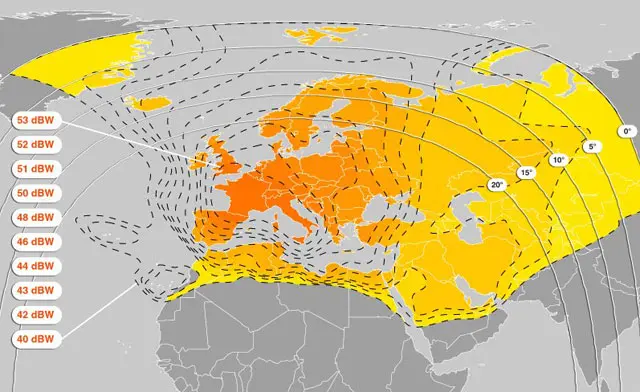
Hotbird is one of the most widely used communication satellites for broadcasting television and radio channels across Europe, the Middle East, and parts of North Africa.
Since its launch in 1995, the Hotbird satellite fleet has played a significant role in providing a wide variety of content, including free-to-air, subscription-based channels, and internet services.
With its strategic orbital position and advanced technology, Hotbird has established itself as a leader in the satellite broadcasting industry.
🚀 On the subject of Hotbird
Hotbird is operated by Eutelsat, one of the world’s leading satellite operators. The Hotbird satellite fleet consists of multiple satellites, such as Hotbird 13C, Hotbird 13B, and Hotbird 13E, which are positioned at 13° East longitude. This prime location allows Hotbird to provide coverage across large parts of Europe, the Middle East, and North Africa.
Hotbird offers an extensive array of services, including:
-
Television channels: A variety of TV channels, including news, sports, entertainment, and educational programming.
-
Radio broadcasting: Both FM and satellite radio services.
-
Data and internet services: Reliable internet and communication links for businesses and individuals.
-
Corporate communications: Private communication channels for corporate and government use.
🌐 Hotbird’s Satellite Fleet
The Hotbird fleet includes several satellites positioned in the same orbital slot at 13° East, which gives it an exceptional ability to serve a large area of coverage.
Key satellites in the Hotbird fleet include:
-
Hotbird 13B
-
Hotbird 13C
-
Hotbird 13E
-
Hotbird 13F (Upcoming)
These satellites are equipped with high-powered transponders that deliver a wide range of services across the broadcast and telecommunication sectors.
🛰️ Frequencies and Services on Hotbird
Hotbird offers services through several frequency bands, including the Ku-band and Ka-band. These frequencies are used for different purposes:
-
Ku-band: The most common frequency for satellite TV and radio services. It offers high-quality transmission with smaller dishes and supports high-definition (HD) channels and internet services.
-
Ka-band: Used for high-capacity data services and satellite internet, offering faster speeds and lower latency.
Hotbird’s wide range of frequencies enables users to access hundreds of television channels, radio stations, and internet services across a broad area.
📡 How to Receive Hotbird Signals
To receive signals from the Hotbird satellite, users need a satellite dish that is properly aligned to the 13° East orbital position. The dish should be connected to a compatible receiver, which will allow the user to tune in to the correct frequencies.
Common Hotbird Frequencies:
-
Hotbird 13C Frequency:
-
Frequency: 11.647 GHz (Horizontal)
-
Symbol Rate: 27500
-
FEC: 3/4
-
-
Hotbird 13B Frequency:
-
Frequency: 12.722 GHz (Vertical)
-
Symbol Rate: 27500
-
FEC: 3/4
-
These frequencies are used for a variety of services, including satellite TV channels, radio stations, and data transmission.
For precise information on the frequencies and satellite settings, FreqSatellite is an excellent resource that provides updated details for users looking to tune their satellite systems to Hotbird’s services.
Hotbird is a major player in satellite broadcasting, offering wide-reaching coverage and reliable services across Europe, the Middle East, and North Africa. Its fleet of satellites provides a broad range of services, including television, radio, internet, and data transmission, making it a key player in the communication industry.
If you are looking to set up a satellite system to receive Hotbird signals or need the latest frequency updates, FreqSatellite offers the most comprehensive guides and settings for all your satellite needs.
We trust these updates have resolved any reception issues and brought your preferred channels back in perfect quality.
Regular changes in satellite configurations make reliable sources essential, and we strive to be yours.
Thank you for trusting us with your satellite needs.
In case you have any problem, you can contact us by leaving a comment below the article, and our support team will respond to you with the correct information as soon as possible.